Saturday, May 7, 2011

Martini

Q. Why did the bartender grab a bottle of vodka during his preparation of your martini? A. Ian Fleming hates you.

The martini is the quintessential cocktail. Even when its represented as caricature, clear liquid gently suspending an olive in an elevated triangular glass, it's unmistakable. Brimming with sophistication and class, the martini is a classic piece of sparkling Americana. With it's four humble ingredients and minimal preparation, the martini is the ultimate dichotomic display of complex simplicity. However, naming those four ingredients and its style of preparation can become a flamboyant display of self defense.

I think vodka is great. It's a clean, understated spirit that I find delicious. I think gin is great. It's a timeless, incredibly complex spirit that I find delicious. I think substituting vodka for gin in a martini is not great. It's as wise as batting yourself in the face with a cactus. A martini is: Gin (preferably London Dry or Plymouth) and Dry Vermouth (preferably French), stirred over Ice, served up, garnished with Olives. Vodka with vermouth and an olive is not a martini. I have always identified that drink by its more common name "vodka and vermouth with an olive." Cold "new age" flavorless gin, shaken, then poured in a glass lined with vermouth is also not a martini. It's not cool, hip, or trendy, it's tasteless and silly. I call those things " 10th round Rocky Balboas" or "cold glasses of gin." Martinis are meant to be bold flavorful drinks expressing the wonderful flavors of juniper, spice, and wood. Using ingredients that do not present that palette to you are less than optimal and should be avoided in martinis.

Once you have the proper ingredients you can start to have some fun and experiment with gin to vermouth ratios. The IBA suggests a 5:1 gin to vermouth ratio for a classic dry martini and I couldn't agree more. 5:1 gives the gin plenty of room without completely drowning out the vermouth. 5:1 is an excellent starting point for newcomers. If you are like me and enjoy vermouth, give a wet martini a whirl and boost your vermouth levels. The wood and spice of the added vermouth create a slightly darker flavor profile. Really break the mold if you have a good bottle of vermouth and try a 2:1 martini.The "traditional" martini is really great but those unfamiliar with vermouth may find it a bit off-putting. The gin should always be dominant but substituting a bit more vermouth will lead to exciting flavor adventures.

Once your martini is complete the garnish selection begins. This I feel is completely subjective. I am a purist and only prefer vermouth soaked olives but I could see a lemon zest being enjoyable in a dry martini made with a strong citrus forward gin. The complex bouquet of a good gin will be complimented by both types of garnish. Fear not for a good martini will not be offended by your choice of garnish.


Finding your favorite cocktail can take a lifetime. Don't be afraid to try new drinks or variants of an old favorite. Share the joys that accompany good food and good drink. But be aware that if at any point we should find ourselves in an establishment that substitutes scotch for tequila in a margarita, rum for vodka in a cosmopolitan, or absinthe for bourbon in an old fashioned, please tell the ostentatious mixologist behind the bar that ill have a beer.

Martini stirred, not shaken.

  1. 4oz. Gin
  2. 1oz. Dry Vermouth
  3. 2 Olives
If soaking olives in vermouth do so 15 minutes beforehand. Chill serving glass with ice water. Stir gin and vermouth over ice in metal shaker with bar spoon for 15 to 30 seconds. If high proof gin (50% alcohol) allow to rest in shaker for 30 seconds to1 minute. Empty serving glass. Single strain up. Serve with olives loose in glass or on skewer.

  • For a "Dirty Martini" add .5oz olive brine to finished martini. 
  • For a "not martini" substitute vodka for gin. 

cheers

Monday, April 25, 2011

Anchor Steam

Lager beer and summertime is a pair that's hard to beat. Like Kosher dogs and baseball, cold beer and hot weather just feel right together. While a flavorful ale is never a bad choice, that dry cool crispness lagers have really starts to pop when the mercury starts to rise. A well made lager can easily hold it's own against any ale and if the situation is right, a good cold lager will beat its ale counterpart.

The word lager is actually German for storage. Using primitive storage techniques, lager beer came to be through the hybridization of ale yeast during longer storage periods in colder temperatures. The lager yeast is able to slowly consume more of the sugars causing the variance in taste between lager and ale. Lagers come in all shapes and sizes. Traditional European lagers range form the lightest Euro pale lagers, the flavorful Czech Pilseners to the powerful German Doppelbocks. American lagers range from the barely there Adjunct style, Czech inspired hoppy Pils, to the darker Dunkels and Bocks. While I give most popular American Lagers 3 enthusiastic thumbs down, there are a few seriously good domestically produced "true" American lagers. One of which I feel truly embodies the American values of  ingenuity, determination, and perfectionism. It's called Anchor Steam.

In the late 19th century keeping things cold in California was difficult. Air conditioning was a hand powered paper fan and refrigeration was known as January. The brewers making lager beer had to find a way to cool the wort rapidly by natural means. This was done by piping the hot liquid to open roof panels to let the ocean breezes act as the cooling agents. This created puffs of steam atop the breweries giving the beer its name. After the cooling was finished the lager yeasts were forced to ferment at the coolest tip of the ale scale. This process of using lager yeast at ale temperatures created beer that tastes like no other. Although the Steam beer made nowadays uses a cooling system that has been drastically modernized, some of the time honored traditions hold strong. The use of all malt mash and copper pot boiling let Anchor stand tall and show the world what real American brewing is all about.


This is easily one of my top three lagers. It is a beautiful crisp lager with deep ale complexity. A nice smooth copper pour unloads a forest of a nose. A fascinating smell of earthy tree bark with slightly fruity hop combined with a understated deep toasty malt. The flavor is identical. Initial floral hop bitter balances quickly  with a warm white bread malt. The balance is uncanny for the individual flavors are quite robust. The floral esters of hop and the slightly sweet grainy malt are simultaneously unified mid palate just before the closing hop fermata. 10 Tie-dye shirts out of  7. The beer is light enough to drink more than one but flavorful enough to nurse for appreciation. Serve slightly warmer than most lagers for best flavor. Steak or lamb will pair vary nicely with a good strong veggie like asparagus or Brussels sprouts. Find some shade and enjoy the weather.

cheers

Thursday, April 14, 2011

Orval Trappist Ale

Contrary to popular belief, most monks are not Buddhist kung-fu masters. Giant temples filled with snap kicking bald dudes in robes is a Hollywood construct. The daily life of a monk is usually quiet and simple with little to no dramatic physical exertion. Long hours of deep metaphysical contemplation and endless menial chores are activities more closely associated with realistic monastic life. Monasteries regularly and intentionally separate themselves from many aspects of modern society. This isolation improves the absorptive spiritual atmosphere but can impede the abby's financial underpinnings. Monks and their collective brethren still need money for many everyday expenses. Since no one gets paid for praying and flipping burgers at the local Mickey D's is not an option, monks have created a market for their own hand crafted wares.

Having very limited resources to begin with, monasteries tend to create simple things with materials that are cheap and on site or easily attainable. Supplies such as grains, animal products, and wood are the most common. While the end product may initially seem like a simple loaf of bread or an everyday wheel of cheese, looking just beyond that simple cover you will find a truly fine artisanal creation. Holding the quality of the product paramount over all other aspects, monks are able to create truly amazing things. The most amazing of these creations is made by a small cluster of Belgian Roman Catholic monks known as Trappists. Their creation is beer. Humble, simple, modest, beer.

Made strictly to support the monasteries' activities, the seven Trappist breweries make some of the best beers in the world. This time, it's not just my opinion. The world over, beer connoisseurs covet these like priceless gold doubloons. With all 7 going in slightly different directions, each beer has specific "style" characteristics all their own. Each displaying absolute top tier craftsmanship using the highest quality ingredients. I was officially and formally introduced to beer proper recently with one them thanks to a co-workers strong recommendation. (Good work Murph!) It's label says Orval but it should read Heaven.


It's never once been advertised, the receipe is nearly 100 years old, and the money made from my purchase of this bottle will not be used toward a corporate profit of any kind. Yes, yes, and oh man this is one hell (woops) of a beer! The head grows as thick as a marshmallow from glimmering bubbles feverishly rising to the top. On the nose you get a bit of sour acidic citrus with a pollen like wildflower thing underneath. Extremely complex but oh so deliciously primitive at the same time. The taste parallels the nose. It's like the venison of beer. Wild, untamed sour yeasty tart explode. The dry hops start cranking mid palate during a very Lambic-esque first act. The unbridled carbonation, courtesy of  the bottle refermentation, make the nuance of the malt difficult to find. There is  however an ever so slight essence of caramel malt found near the back door. The hop finds its way though the complicated forest of flavors and sets up an extremely dry acidic finish. We're talking Champagne dry finish. Simply amazing.

This beer gets 652 out of 650. The complexity of this beer may be difficult to grasp by many. The strong natural flavors of the ingredients don't hide at all and someone not comfortable with foreign flavors may be put off. That said, any one who likes beer must try this at least once. If you can, drink it from a chalice 2 degrees warmer than you think it should be drunk. The intricacies will be best tasted when the beer is just above cool. Put your tuxedo or little black dress on and prepare for a formal introduction to one of the best alcoholic drinks on earth.

cheers

Saturday, April 2, 2011

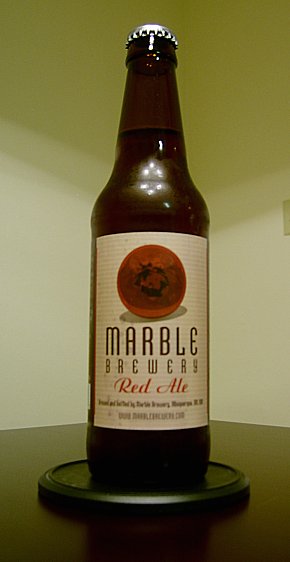
Marble Red

2008 was one hell of a year. The world changed in so many notable ways that  future historians will likely argue as to which event had the greatest impact on mankind. Was it Fidel finally giving his big boy toys to his brother Raúl or China hosting their first summer Olympics in grand style? Could it have been Bill Gates giving his keys to Apple someone willing to bear the toil of counting to 50 billion, or The Hadron Collider firing up successfully without sucking the earth into another dimension. Only time will tell what macro-event will cause the greatest amount of change for mankind.

While those events were profound in the grand scheme, I was witness to something much more powerful and much more personal in 2008. Something so memorable that it turned this once ordinary beer chugger into an official, hop-headed snobby aficionado. The Marble Brewery opened its doors. Yes, I knew the difference between a drinkable beer and horse water, but I didn't know how far it was from a good beer to a great one. It would take only a single Dixie cup, filled with Marble IPA at a friends wedding party to know that from that day forward I would seek only greatness in beer. Fresh floral and delicious, Marble beer would forever have a fan in me.

Asking me which Marble tap was my favorite used to be simple. In an almost reactionary response, without hesitation I would say IPA. The amazing citrus hop with mild semi-sweet malt is near perfection. But as time went on the more I drank, and the more I drank the more I liked. Three years after my first IPA it's now a toss-up between the Oatmeal stout, the IPA, and the Red Ale. All three are outstanding beers that display precise style characteristics rarely seen in mass produced beer. This time around I chose the Red Ale.    


The Marble Red Ale pours a very cool rusty amber with a smaller yellowish head. The slightly toasty caramel malt with stronger than average hop give this beer a bit of a bran muffin nose. The hops really pop in this one with a surprisingly bright initial character for a red. It is definitely not a run of the mill malty Irish Red or a bland American Amber. The huge hop is subdued by an absolutely delicious lush blanket of caramel malt. The reaction of "Woah! Hops!" quickly followed by "Oooohhh Malt" is the best way to describe the initial 5 seconds of taste. The hops will get your attention but don't be fooled, the malt is the star here. Outstanding med/thick mouth feel makes your second taste not soon enough. Very nicely balanced finish with a slight nod to the hop. As the light hop resin lingers I bask in the glory of beer greatness. 

Ill say 4 hammers out of 3 sickles. Marble wins again! A great balanced ale that would compliment most meals. Bold enough to cut through spicy Thai or pizza and humble enough for potato soup or fried egg sandwiches. You really can't go wrong with beer this good. This is the caliber beer you serve to make a good impression or buy someone as a gift. A joyous time will be had with Weezer and Marble Red.

cheers

Wednesday, March 23, 2011

Happy Camper IPA

Being an alcohol connoisseur and having access to really good, local, micro-brewed beer is like being a little kind living near Santa's workshop at the North Pole. Hop flower fairys and candied dark malts dance with joy seven days a week. Boundless variates and quirky experimental beers keep things interesting and fun. Whenever you want, you can saunter on over and enjoy something special seemingly made just for you. Lucky for me New Mexico has been bestowed with multiple gifted micro-breweries. One of the best is the Santa Fe Brewing Co. of Santa Fe, NM.

Santa Fe Brewing Co. makes some primo suds. Interestingly enough, four of which come in cans. (Yah I'm on a can kick so what you wanna fight about it?) A nice clean pilsner for the summer months, a humongous Java stout that should be sold at Starbucks, one of the absolute best Oktoberfests you'll find this side of the pond, and an IPA that's a real kick in the pants. Being a self diagnosed hop-head, I decided to jump right into the IPA first.

 
Happy Camper IPA is unmistakable. The can's design is the the state flag of New Mexico. Emblazoned with a red Zia symbol, the bright yellow can is hard to miss. Upon pouring the amber liquid a very strong hop aroma hits you. A deep, sappy, almost spicy, pine resin jumps from the can. The taste follows your nose. Very bitter, semi dry hop that has an almost smokey character. Mild fruit flavors dance under the pine dominance. The malt takes a very cool turn in an attempt to balance the nearly out of control bitter. It uses the sweet natural flavor of the malt for balance, not the calculable amount. The light sweet malt enhances the fruity release of this powerful IPA. The bitter will linger a bit but it's a savory and enjoyable taste.

I approximate 8 out of 4 pine cones would be generated if this fell in the forest. This is one of the best portable beers available. This would make for some very happy burgers and dogs but a good spicy sausage with some onions and peppers would be perfect. Fire, meat, lake/river (what ever floats your boat!), and this beer is a combo that is tough to beat. The sound of a crackling fire and some gentle water will guarantee smiles.

cheers   

Wednesday, March 9, 2011

Captain Morgan Original

Having humble expectations for inexpensive booze will not only improve your chances for enjoyment but may also broaden your horizons. Remember, it's just as important to know the negative characteristics of alcohol you don't like as to the positives you do like. Now don't get me wrong, I firmly believe that alcohol snobbery has its place. When your making cocktails, shopping for a $30 plus bottle of wine, appreciating a fine spirit, or searching for that perfectly balanced craft ale, you will need to occasionally flash your snob badge. I am also fully aware that there is a tolerable level of bad and some booze is undeniably undrinkable. However, if you find yourself laughing loudly with friends next to a homemade wood burning stove in Wisconsin during an epic winter, some $10 blended whiskey might be just what the doctor ordered. No, it's not artisanal and yes, you will notice flaws but if your mindful of this beforehand it wont be offensive and you might actually enjoy yourself.

Just so its crystal clear, Captain Morgan Original is not a sensational rum. It's massively overproduced, way over marketed, uses artificial flavors, and is cheaply distilled. It's also not trying to hide any of that information from you. Captain Morgan is a simple drink that knows it's place on the shelf. If are looking for a deep,complex, flavorful rum that can be sipped neat look elsewhere.


Rum is supposed to be sweet, it is after all distilled from sugar cane. Spiced rum is supposed to add a bit of vibrancy to that sweet of the natural spirit. Captain Morgan Original does succeed at this. Neat, the sweet molasses is very present with vanilla dominating the spice. Some caramel, nutmeg, and cinnamon, are also present. Unfortunately the vanilla has a funky artificial tinge and the odor of cheap alcohol kind of ruin the nose. Upon sipping, the smooth nature of the rum is present in the mouth feel with not too much oak and at only 70 proof not a lot of burn. Sadly, after gulping it down, that damn fake vanilla pops its clown face back up and overtakes much of the rest of the spice. The finish  gives a little pepper with a push of cheap alcohol. It's not undrinkable neat, but not all that enjoyable.  In order to get the Captain to truly swash-buckle, throw some rocks in your glass or some lime and Coke. It sure helped me.

With 3 ice cubes in my glass I now had a decent drink. The cold made the questionable distillation disappear and the water from the melting ice toned down the vanilla to allow the other flavors some elbow room. I don't know if I would order one in a bar but I wouldn't turn down a free Captain on the rocks. Throw some Coke in the mix with a lime wedge and you've got a simple cocktail. Nothing fancy and at $12 a bottle it does what it needs to. I'll say 3 arrr maties out of 2 1/2. Best with large groups, get your self some kettle corn and have some fun.

Capt'n & Coke

  1. 3oz Captain Morgan Original
  2. 7oz Coke
  3. 1-2 Lime wedges
Pour Rum over lots of ice in pint glass. Pour Coke. Stir gently. Lime to taste.

cheers

Friday, March 4, 2011

Mighty Arrow

Seasonal beers can really showcase a breweries talents. In order to capture the essence of a single season and put it into a beer, a brewery must have high attention to detail. A good seasonal needs to enhance the various nuances of a specific time of year and highlight some of the accociated activities. Winter needs something robust and spicy to warm you up and cut through the rich holiday food. Summer needs a crisp, quenching brew that douses the heat and is light enough to keep you reasonably sober through 9 innings. Fall needs an earthen malty beer or a quirky fruit/vegetable beer that honors the harvest and embraces the slowly dropping temperatures. Spring needs a lively, flavorful beer that begs you to get outside, dust off that grill, and toss the Frisbee around. One of the best breweries to offer seasonals is New Belgium. Their best offering is their spring seasonal, Mighty Arrow. It has me looking forward to March each and every year.


This beer is the tribute to Arrow. New Belgium's founder's Border Collie mix that ran around the brewery  brightening everyones day. The last line on the bottle says "She never met a tummy rub she didn't like. Atta girl Arrow." With that, I didn't even need to open the bottle to know I was going to like it. It's an American Pale Ale that just like Arrow, will have you smiling all spring long.

A beautiful thick fluffy head bubbles to brim of your glass with even a modest pour. Nice bright hop aroma with a light malt in the background. Not IPA hop. Just a mellow hop forward pale ale. The flavor follows the nose. Amazing green herbal citrus hop with nice grainy malt balancing it out. This is like the inverse of Fat Tire. The Toasty malt takes a back seat to the hops. Outstandingly crisp and clean for an ale with 6%ABV. While the hops may be the flavor focus, it has a surprising amount of malt for such a light bodied beer. The finish is dry with nice hop bitter right at the end. If this beer doesn't inspire you to fire up that grill for some burgers and break out your ball cap, nothing will.

I giver her 42 wet noses out of 40. This is your picnic beer. Burgers, sandwiches, or even a good grilled flank of bold fish like salmon would be awesome. This is best served outside with your best friends. A relaxing spring evening outside patting your pups on the noggin is what this beer is all about. Atta girl indeed.

cheers
(woof)